
Before answering that question, let’s take a quick look back.
In the early 2000s, as businesses began recognizing the potential of the internet for their IT infrastructures, a new idea emerged: what if companies could enjoy the benefits of the cloud while maintaining full control over their data?
That’s how private cloud was born—a response to the limitations of traditional infrastructures and an alternative to the first public clouds, such as Amazon Web Services (launched in 2006) and Google Cloud.
At the time, companies faced a dilemma: how to reconcile cloud flexibility with data security and sovereignty? Early private cloud solutions—often hosted on-premises—addressed this challenge by offering dedicated, customizable, and secure infrastructures.
However, with the rapid rise of public cloud giants in the 2010s, many believed private cloud would disappear, overshadowed by the simplicity and scalability of solutions like Amazon Web Services, Microsoft Azure, and Google Cloud.
But the story didn’t end there.
Data breach scandals, service outages, increasingly strict regulations (such as the General Data Protection Regulation in Europe and Loi 25 in Quebec), and growing awareness of the risks associated with dependence on public cloud providers have reignited interest in private cloud.
In today’s fully digital era, organizations are more determined than ever to regain control of their IT infrastructure. After years of public cloud dominance, many companies are rediscovering the advantages of private cloud: a tailored, secure solution aligned with their specific needs.
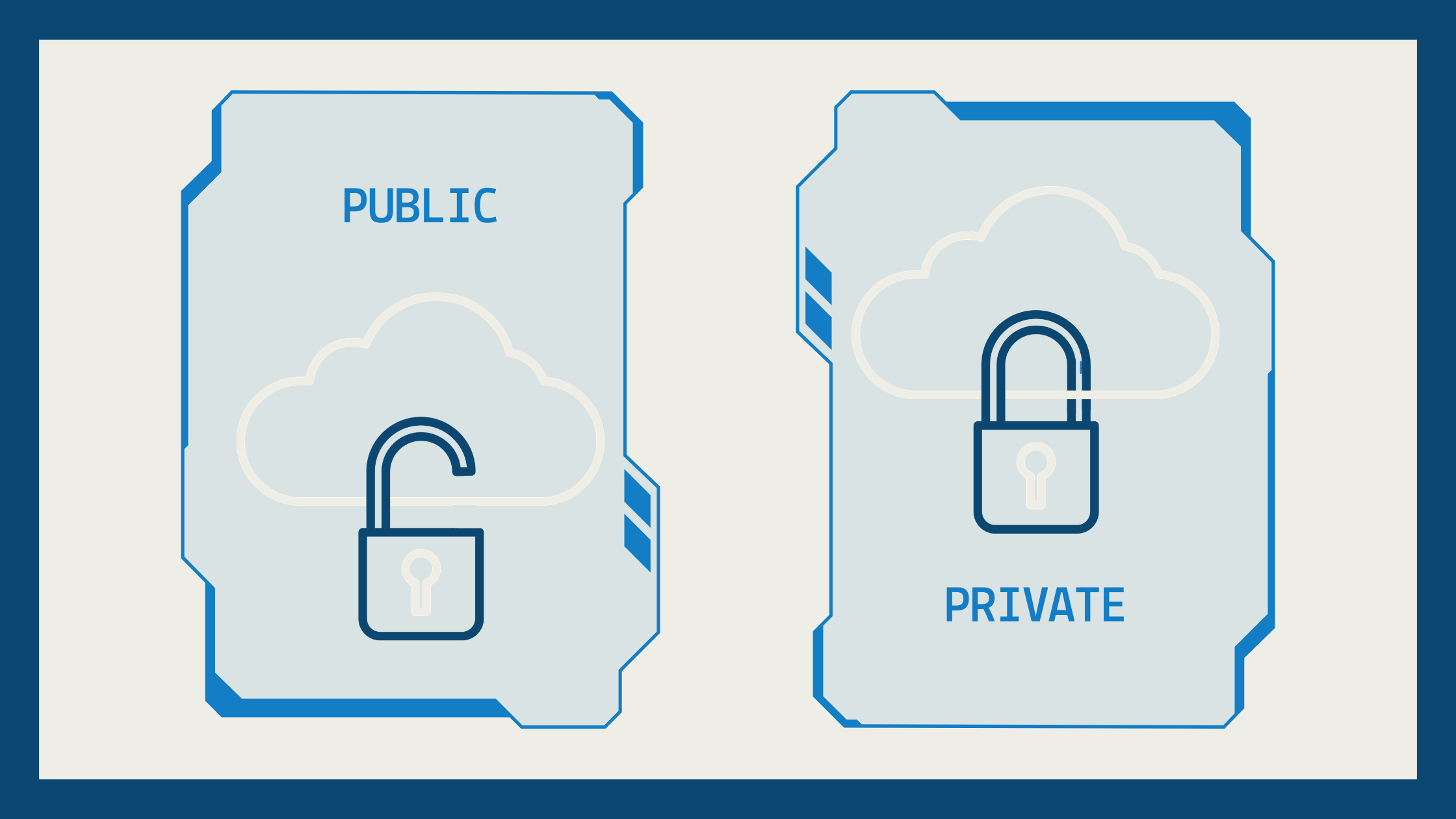
Private cloud provides a dedicated infrastructure—hosted either internally or with a trusted provider—ensuring sovereignty, enhanced security, and compliance with local regulations. Unlike public cloud environments, where resources are shared among multiple users, private cloud enables full customization of IT environments while delivering consistent and predictable performance.
4 Key Reasons to Trust a Private Cloud
1. Predictable and Controlled Costs
One of the main strengths of private cloud is financial transparency.
Unlike public cloud models—where costs fluctuate based on usage—private cloud offers clear, predictable budgeting with no unpleasant surprises.
According to a Broadcom study, 90% of organizations value this financial visibility, as it simplifies IT planning and expense management.
2. Security and Compliance: A Top Priority
With increasingly strict regulations—such as the General Data Protection Regulation and Loi 25—data protection has become a critical issue.
Private cloud helps organizations meet these requirements by offering:
- Full control over data hosting and management
- Easier compliance with local laws, avoiding exposure to foreign legislation like the Cloud Act
- Enhanced security through dedicated infrastructure and tailored protocols
A study by GTT Communications found that 92% of organizations place greater trust in private cloud for security and compliance—well ahead of public cloud solutions.
3. Performance and Reliability: Dedicated Resources
Private cloud eliminates the slowdowns and service interruptions often associated with shared public cloud environments.
With dedicated infrastructure, businesses benefit from:
- Consistent performance
- Reduced latency through optimized and localized resources
- Full autonomy to scale capacity as needed
A Flexential survey revealed that 83% of companies are returning to private or hybrid infrastructures to avoid the unpredictability of public cloud environments.
4. Flexibility Without Compromise
Contrary to common misconceptions, private cloud does not mean rigidity—quite the opposite.
It enables deep customization of IT environments while maintaining strong agility.
In fact, 53% of IT leaders consider private cloud their top priority for deploying new workloads over the next three years.
Private cloud is no longer a legacy alternative—it is a strategic choice.
In a world shaped by regulation, cybersecurity threats, and geopolitical uncertainty, organizations are rediscovering that control, predictability, and sovereignty are not limitations, they are competitive advantages.