
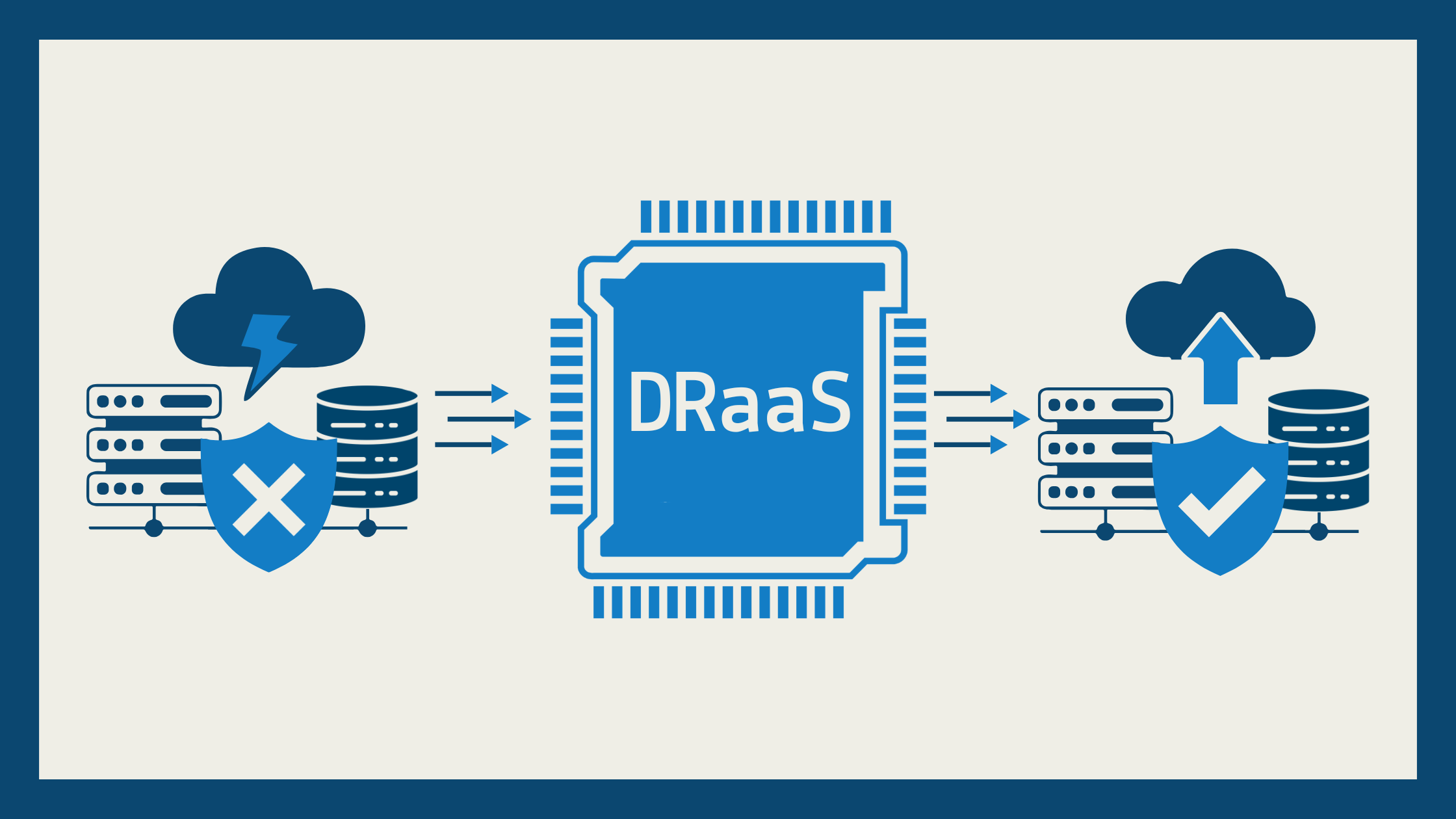
Disaster Recovery as a Service (DRaaS) is now an essential solution to ensure business continuity in the event of an outage or cyberattack. Here’s how it works at Oriso—your Quebec sovereign cloud provider—its benefits, and why it has become indispensable for modern organizations.
Setting the Stage: What Is DRaaS?
DRaaS emerged in the early 2010s, driven by the rise of cloud computing and virtualization. Pioneers such as SunGard, IBM, and Veeam enabled businesses to replace costly secondary physical sites with outsourced and automated solutions.
Early adopters included critical sectors:
- Financial institutions like Goldman Sachs and JPMorgan Chase
- Healthcare providers such as Kaiser Permanente
- Public administrations, where operational continuity is mission-critical
With tools like Zerto and Datto, DRaaS became accessible to SMBs around 2015, before integrating into major cloud platforms like Amazon Web Services and Microsoft Azure.
Today, with AI and multi-cloud strategies, DRaaS has become a standard for organizations of all sizes.
In practical terms, DRaaS replicates and backs up a company’s IT systems to a secure remote site. Unlike traditional disaster recovery—which required expensive secondary data centers—DRaaS offers a flexible, expert-managed solution.
In the event of a cyberattack, hardware failure, or natural disaster, virtual machines can be quickly restarted in the secure recovery environment. This minimizes downtime and data loss, ensuring optimal business continuity.
Real-World Example: When Replication Saved a Canadian Municipality
To understand DRaaS’s importance, consider the 2016 wildfire in Fort McMurray (Regional Municipality of Wood Buffalo).
As the fire forced mass evacuation, the municipality had to abandon its physical servers. Thanks to real-time replication to a secure remote site, it was able to:
- Switch operations in under four hours
- Maintain emergency services and payroll for frontline employees during three months of evacuation
- Avoid total data loss that could have paralyzed the city’s reconstruction
Their technology partner stated:
“In two days, Wood Buffalo had fully restored all primary and secondary systems. They were able to send and receive emails and process payments, maintaining operational continuity.”
This case proves that DRaaS is not only protection against hackers—it’s a lifeline in the face of natural disasters, power outages, or infrastructure failures. Ten years later, the lesson remains more relevant than ever.
How DRaaS Works: Step by Step
1. Environment Assessment
A detailed analysis defines Recovery Time Objectives (RTO) and Recovery Point Objectives (RPO)—how quickly systems must be restored and how much data loss is acceptable.
2. Replication Deployment
Using technologies such as those from Veeam, data replication is configured as continuous or scheduled synchronization, ensuring up-to-date protection.
3. Failover on Demand
If an incident occurs, virtual machines automatically start in the recovery environment—manually or automatically triggered—ensuring near-immediate continuity.
4. Failback to Primary Site
Once the issue is resolved, systems transition back smoothly to the main infrastructure without data loss.
Key Business Benefits of DRaaS
24/7 High Availability
Redundant infrastructure and continuous monitoring significantly reduce prolonged downtime risks.
Scalable Resources
CPU, RAM, and storage can scale dynamically to meet business demands without new hardware investments.
No Equipment to Buy or Maintain
The provider manages capacity and maintenance, allowing businesses to focus on core operations.
Operational Simplicity
One provider, one team—simplified planning and execution of recovery strategies.
Data Sovereignty and Compliance
Replication, backup, and failover systems can remain hosted locally (e.g., in Quebec), protecting data from foreign legislation such as the USA PATRIOT Act or the Cloud Act.
Rapid Recovery After Cyberattacks
In ransomware scenarios, infected systems can be isolated and operations restarted from a secure environment—strengthening organizational resilience.
Why Sovereign DRaaS Makes the Difference
Localized and secure data
Replication and backup systems remain under local jurisdiction, eliminating exposure to foreign laws.
Turnkey solution
No hardware purchases, no infrastructure management—everything is handled by the provider.
Broad compatibility
Modern DRaaS solutions support SQL, Windows, Linux, and most virtualized environments without major infrastructure changes.
Recovery aligned with business needs
RTOs are often under four hours, and RPOs are fully customizable based on operational requirements.
DRaaS: A Critical Pillar for Modern Organizations
Disaster Recovery as a Service is far more than a backup solution—it is a cornerstone of enterprise resilience.
By outsourcing disaster recovery management, organizations gain optimal protection without the technical and financial burdens of traditional solutions.
Whether ensuring high availability, safeguarding data sovereignty, or simplifying recovery planning, DRaaS delivers a comprehensive response to today’s IT risks.
In a world of increasing cyber threats and system failures, investing in DRaaS is no longer optional—it’s strategic.